
Getting free
Some thoughts on how the Los Angeles Catholic Worker is prepping me for the apocalypse

Hi everyone. New subscribers, hello. I intend to share some more reflections from the Los Angeles Catholic Worker soon. But for now, just some quick updates:
I am still living at the LA Catholic Worker. The big change is that I started a full-time teaching job this school year. I have a lot of reasons for pivoting back to the classroom but the simplest is that it feels like there’s unfinished business there somehow. Time will tell.
This arrangement means I have to balance my dedication to the LACW community with my commitment to my new school and all my goofy students. Life feels like a Jenga tower, but for the most part, I am happy. Who knew?
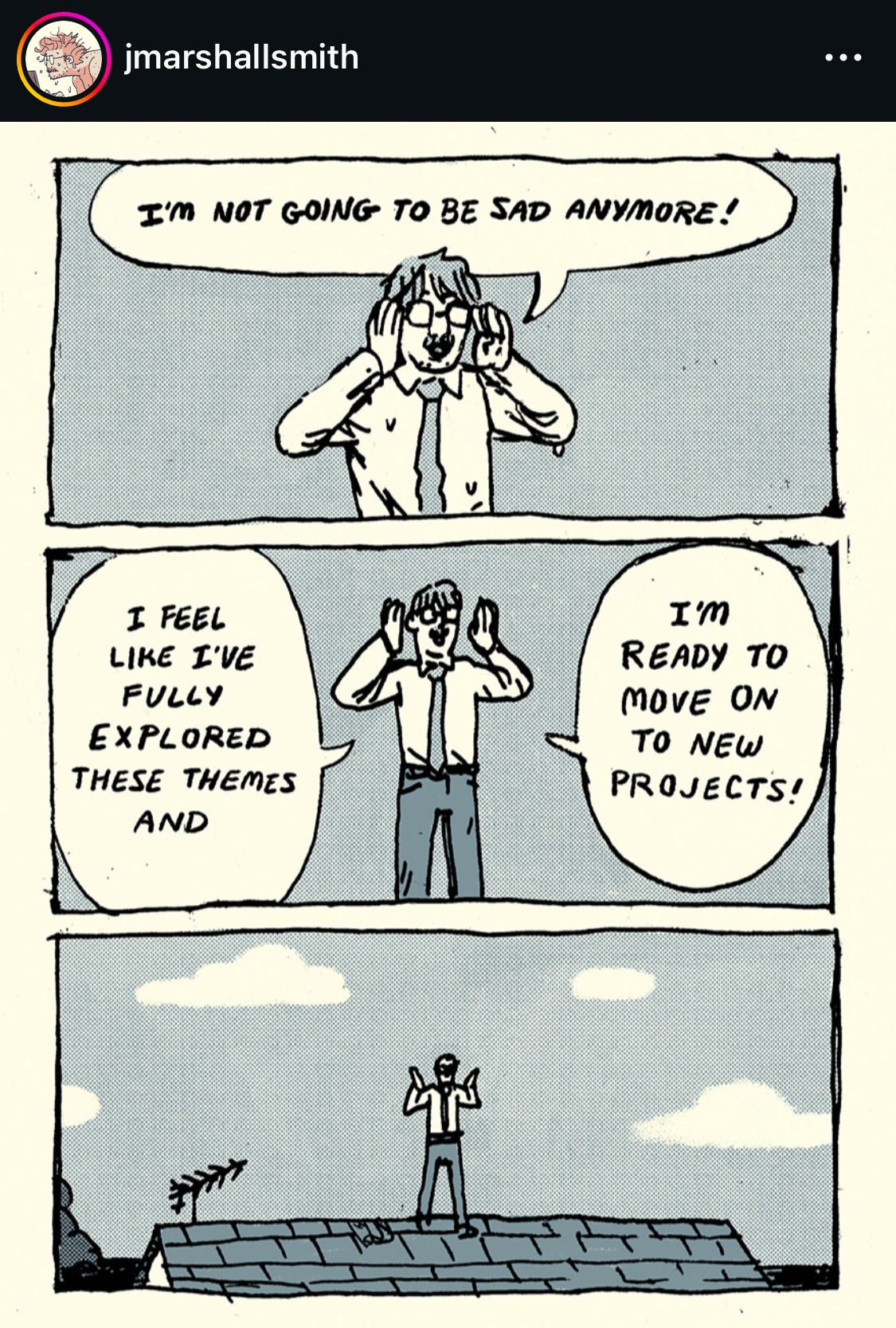
My mental health and physical health were at an all-time low for most of 2024 and into 2025, which is partially why I haven’t written much here. But I’m doing better now and relating very much to this comic by Jonathan Marshall Smith, a favorite artist of mine:
I’m resending a reflection I wrote for Roundtable, which acts as a kind of writing smorgasbord for the various Catholic Worker communities around the country. For family and friends who subscribe, this is as good a life update as any. For the new subscribers, forgive the repost. But maybe the re-read will inspire you to come visit us in Los Angeles?
Article below. Love y’all; more soon,
Claire
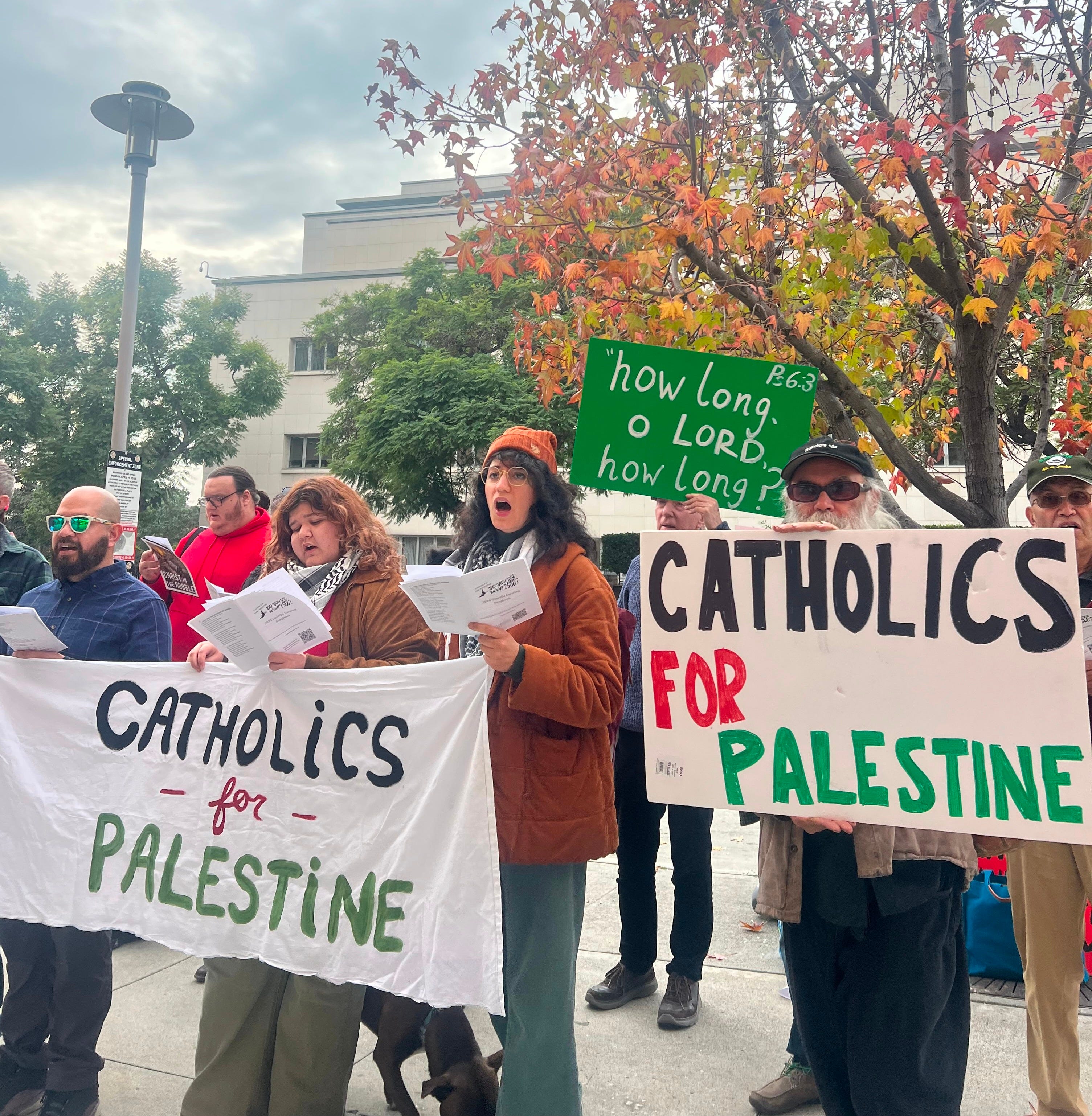
By Claire Lewandowski
This is an open letter to anyone who is wondering how to prepare for the apocalypse. And I don’t exactly mean in the doomsday prepper sense—although life at the Catholic Worker will certainly teach you how to cook large amounts of food, among other practical skills—I mean in a deeper sense, in a resilience sense, in a “how do I face down the big one and not shudder, not falter in the face of destruction?” kind of way. It turns out this has something to do with interior freedom, something I am learning about almost by accident here at the Los Angeles Catholic Worker. And if you are willing, I want you to join us.
Okay, maybe the little voice in your head just said, now hold on, I’m just checking Substack here - let me scroll in peace! And I hear you. But hear me out.
If you’re reading Roundtable, it means you have at least a passing interest in the Catholic Worker movement. Perhaps you’re an old-timer keeping up with what other communities are doing. Maybe you’re a college student who learned about Dorothy Day in a class, went down an internet rabbit hole, and came back up with this newsletter. Or maybe you’re a long-time fan of the CW movement, but in a cheering-from-the-sidelines kind of way, in the way that I watch Olympic athletes from the security of my couch, appreciative and amazed, certain I could never do what they do.
Well, I have bad news: not only can you do what a Catholic Worker does, it is urgent that you must. You don’t need me to tell you that things are bleak right now. And if you’re anything like me, this feeling of everything being wrong can lead to a kind of paralysis. The good thing is that those of us drawn to something like the Catholic Worker share the common experience of longing for a better world. The challenge is that this longing sometimes feels at odds with the way we’re actually living our lives as we stay paralyzed by uncertainty or self-doubt.
I speak for myself first and foremost. When I first learned about the Catholic Worker, I was on a slow path toward the things I thought would keep me safe in the face of a struggling world: a teaching career, stable living arrangements, a reliable circle of friends and family. Marriage. But once the pandemic began, those things all shook loose. The things I thought would keep me safe evaporated right from under my heart.
This brings us to the Los Angeles Catholic Worker, where I’ve lived for over two years. Turns out that in the face of global catastrophe, I was no hero. I turned tail and ran for my life. What I mean is that the thing that brought me here was not so much a sense of duty to save someone else’s life but a desperate attempt to save my own. The self-reflection galvanized by the pandemic brought me to the conclusion that maybe I wasn’t a good person anymore. I thought maybe I never had been.
So maybe apocalypse isn’t all that different from everyday life. In both scenarios, we’re just trying to save ourselves and hopefully those around us, too. Jacques Philippe writes in his powerful book Interior Freedom, “God sometimes calls us to make sacrifices but he also sets us free from fears and false sense of imprisoning guilt.”
This quote unlocks something about the Catholic Worker that I’ve been puzzling over for the past two years. I first came to the LACW with a kind of spiritual bondage tied around my soul. I thought I could save myself through good works, although I hid this motivation from myself by cloaking it in the desire to save others. The problem with this whole endeavor is that it was based on the premise that I was somehow in control of this process of salvation. But the only thing God wants for us is to be free. Free yourself so you can help free others.
So why come to the Los Angeles Catholic Worker to get free? I can’t lie; this process has happened through no masterminding of my own. Your mileage may vary! But if any of what I’ve shared here resonates with you—that sense of paralysis or shame, that desire to do good but the fear that perhaps you can’t—there may be something here for you. Let me show you.
When I first arrived at the LACW, my fellow community members were caring for two housemates on hospice care. I had of course been alerted to this when we first discussed the possibility of my visit. But it was another thing entirely to be facing down the prospect of suffering and death right in the four walls I now called home. Within two weeks I was helping to turn our dear housemate over in the night, administer pain meds, spoon-feed him liquids, read poetry to him when I wasn’t sure he could even hear me anymore. And then one morning, after several days of being convinced he was totally gone, he took my hand in his wasted dry one and brought it to his lips, kissing it with a sudden display of tenderness that hit me like a clean window hits a bird.
The night he died I heard a knock on my bedroom door at one-thirty in the morning and I knew. For a few moments I cowered in bed, unwilling to look death in the face. I came here to make food and tend to the living, I begged God. Don’t make me go out there. Something beyond me compelled me out of bed. I went to the hospice room where Rudy’s body lay. For a moment I was filled with horror and I was the scared kid I’ve always been, unable to deal. The Accuser reared up. I told you. You aren’t strong enough for this.
But then Catherine lit a candle. My other housemates began to tenderly wash his body. From somewhere a book of psalms was produced. And before I knew it I was washing his body too. I felt stupid, clumsy, unworthy. I just got here a month ago. They’ve been taking care of him longer. I’m not meant to be doing this. I haven’t earned this. Every quiet moment that passed, those voices faded. Instead my head filled with the sound of my housemates reading poetry, talking quietly about arrangements for the morning. I became empty and the sacredness of death filled me like water fills a bowl.
Another moment. Not long ago, one of our elderly Spanish-speaking housemates came down with COVID. As per house rules, she confined herself to her room and we brought her meals. But after a day or so had gone by without us seeing her, unease grew. “I don’t like it,” my housemate Megan told me. We went to her room and knocked on the door. Nothing. We called her name. Still nothing. I thought with some despair of how utterly deaf she is. We banged on the door so loudly the house shook. “MARIA!” we yelled. We reluctantly tried the doorknob, willing to sacrifice a bit of her privacy for our peace of mind that she was in fact still alive and well. But the knob didn’t budge. It was locked. Finally Megan grimaced, said, “We’re gonna have to go in through the window.”
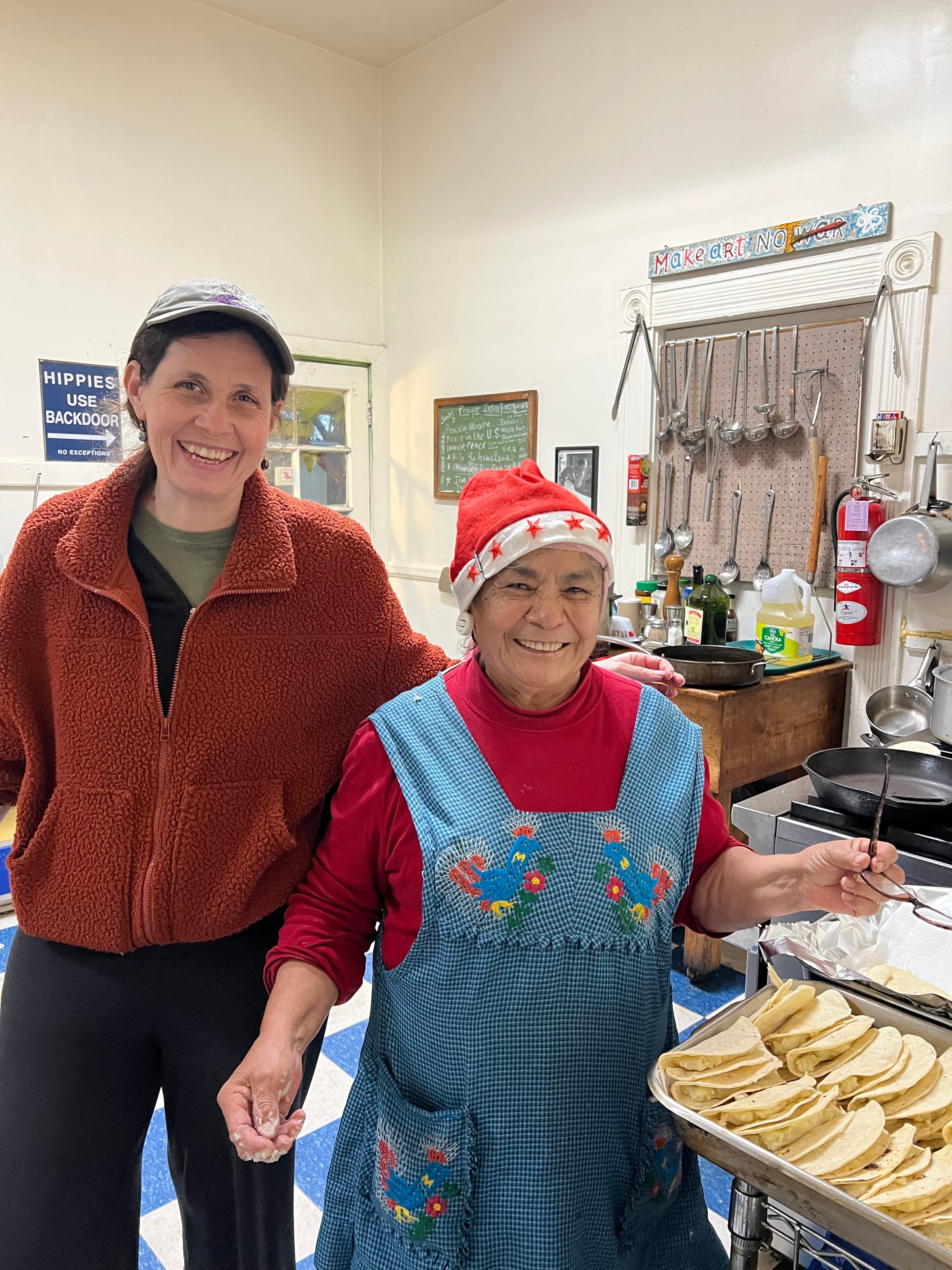
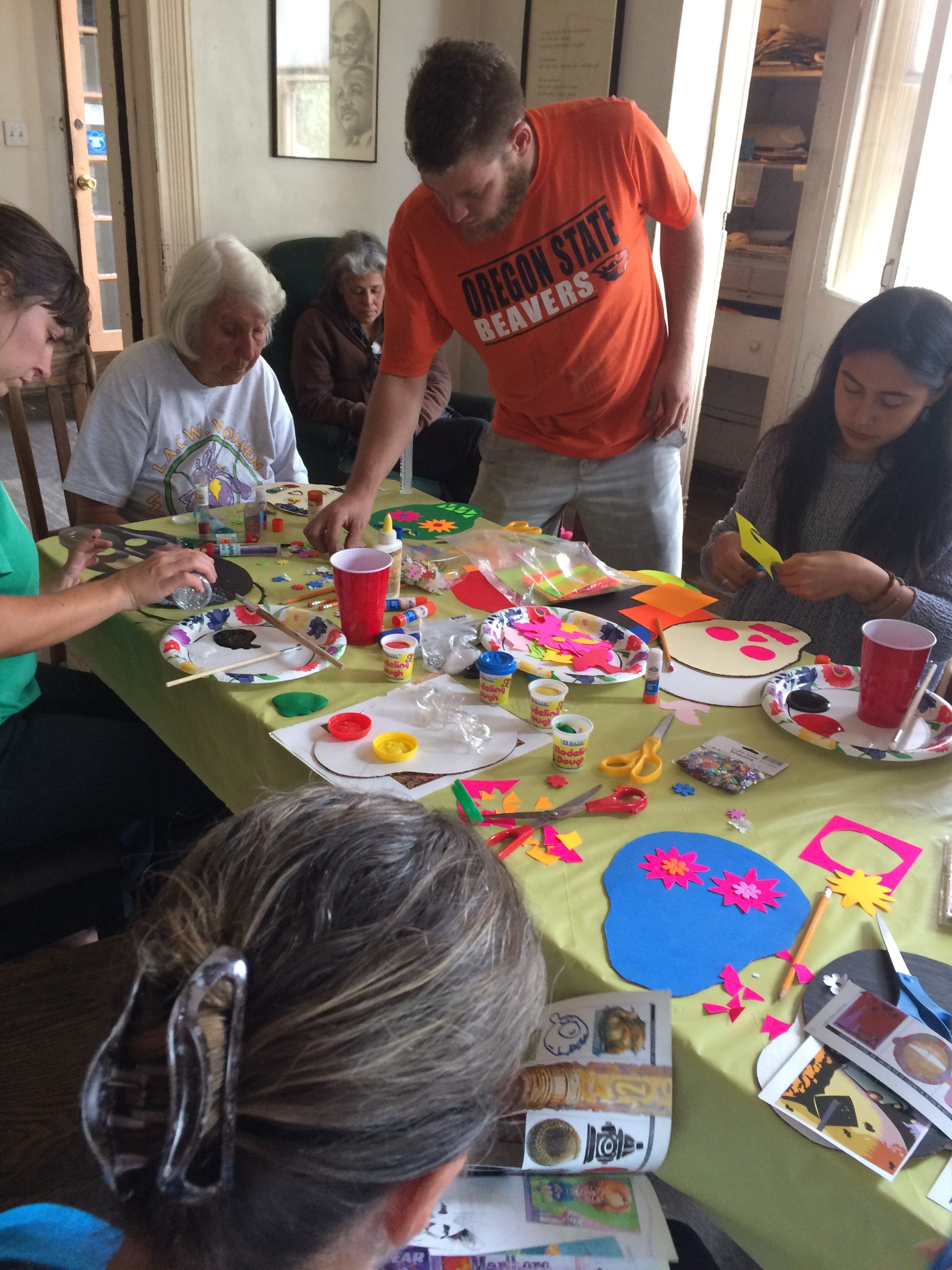
Friend—the indignity of being a Catholic Worker cannot be overstated. For every seemingly “noble” thing I’ve ever done, there are at least three wretched ones right behind it. This night, it came in the form of a ladder propped against the back house wall, my dumb ass on the second-to-last rung, sticking my head through the screen Jed had pried loose, yelling “MARIA!” Her TV clattered to the floor and she started awake, certain there was an earthquake. But she was alive.
The mysterious fruit of moments like these is that my desire to avoid them is slowly fading. An example: here at the LACW, we have difficult but necessary conversations every week as a community. We figure out who’s in charge of what. We ask for apologies and we apologize. We point out places we messed up, fall along old fault lines of conflict before shaking ourselves off and asking for forgiveness, so on and so forth. When I first got to the community, these conversations scared me shitless. I was so used to melting in the face of conflict, of flailing about like one of those inflatable tube men outside of car dealerships, blowing wherever the wind took me and doing my best not to be in anyone’s way.
But a curious thing happened over time. I remember one conversation where a couple of my housemates were heatedly discussing something to do with food shopping and instead of going elsewhere in my head, a practice so ancient to me I might as well have come out the womb doing it, I instead heard a voice: stay.
Stay. Stay with it. And I did. I breathed slowly and forced myself to hear my housemates, to look at their faces, to feel love and a desire for communication and resolution. I stepped into the conversation when appropriate and stepped back when appropriate. Somehow, I had found enough inner freedom to stay when things got tough. I didn’t need to run.
Why tell these stories? All the horsemen of the apocalypse currently swarming around us (if you can count them, let me know; there seem to be way more than four) thrive on fear. They thrive on the thing that tells you you’re no good, that you can’t do it, that no one will help you, that you better just hunker down and keep yourself safe. They thrive when we fear indignity: ours or someone else’s.
But the secret of the Catholic Worker is that if you can bear to face it, indignity loses its power. You learn a kind of grounded acceptance. You learn to take a licking and keep on kicking. You learn to laugh in the face of calamity. You learn to stick your big head right through the screen window of decency and yell your friend’s name at the top of your lungs, refusing to give up, to consider them lost.
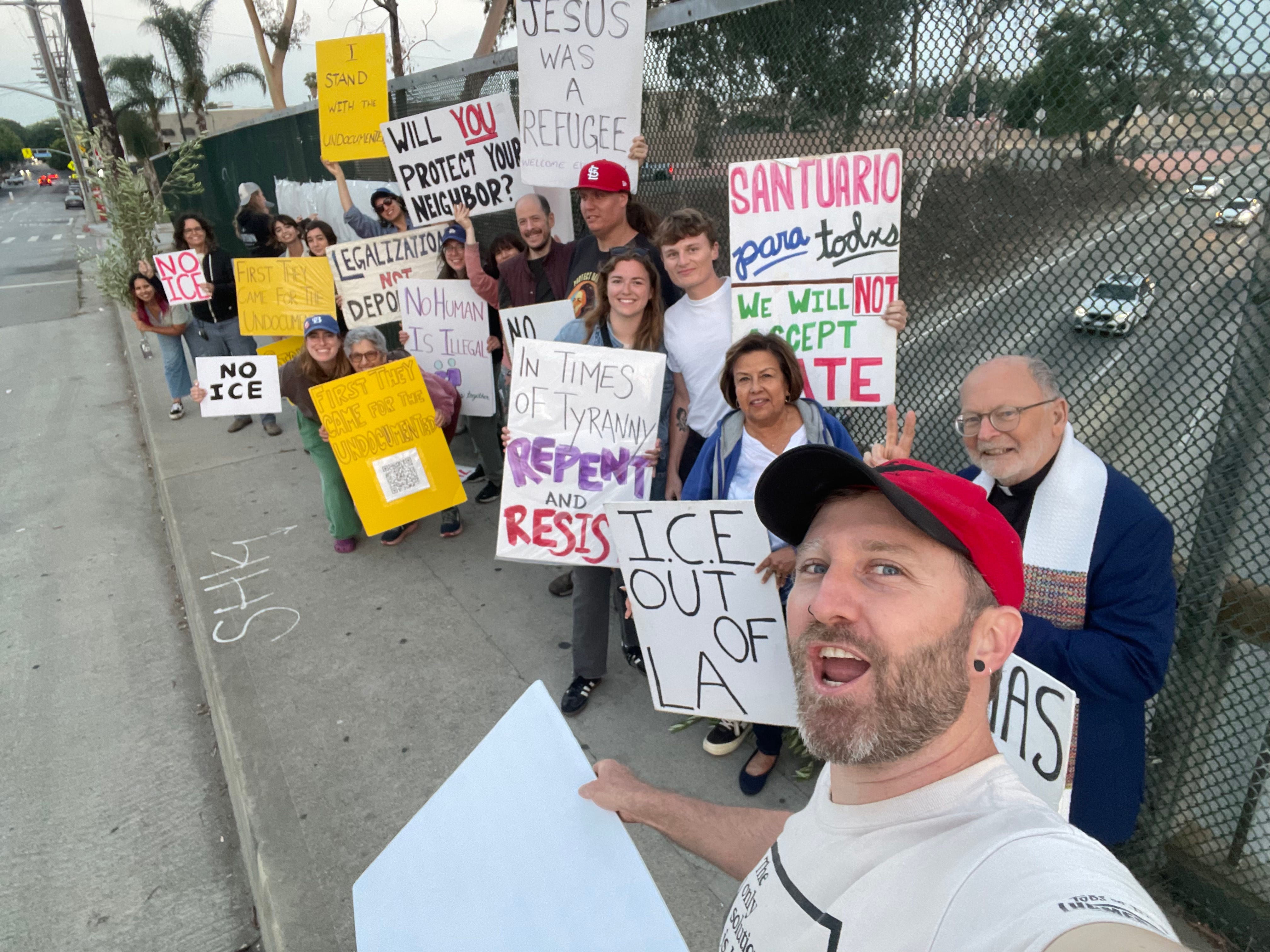
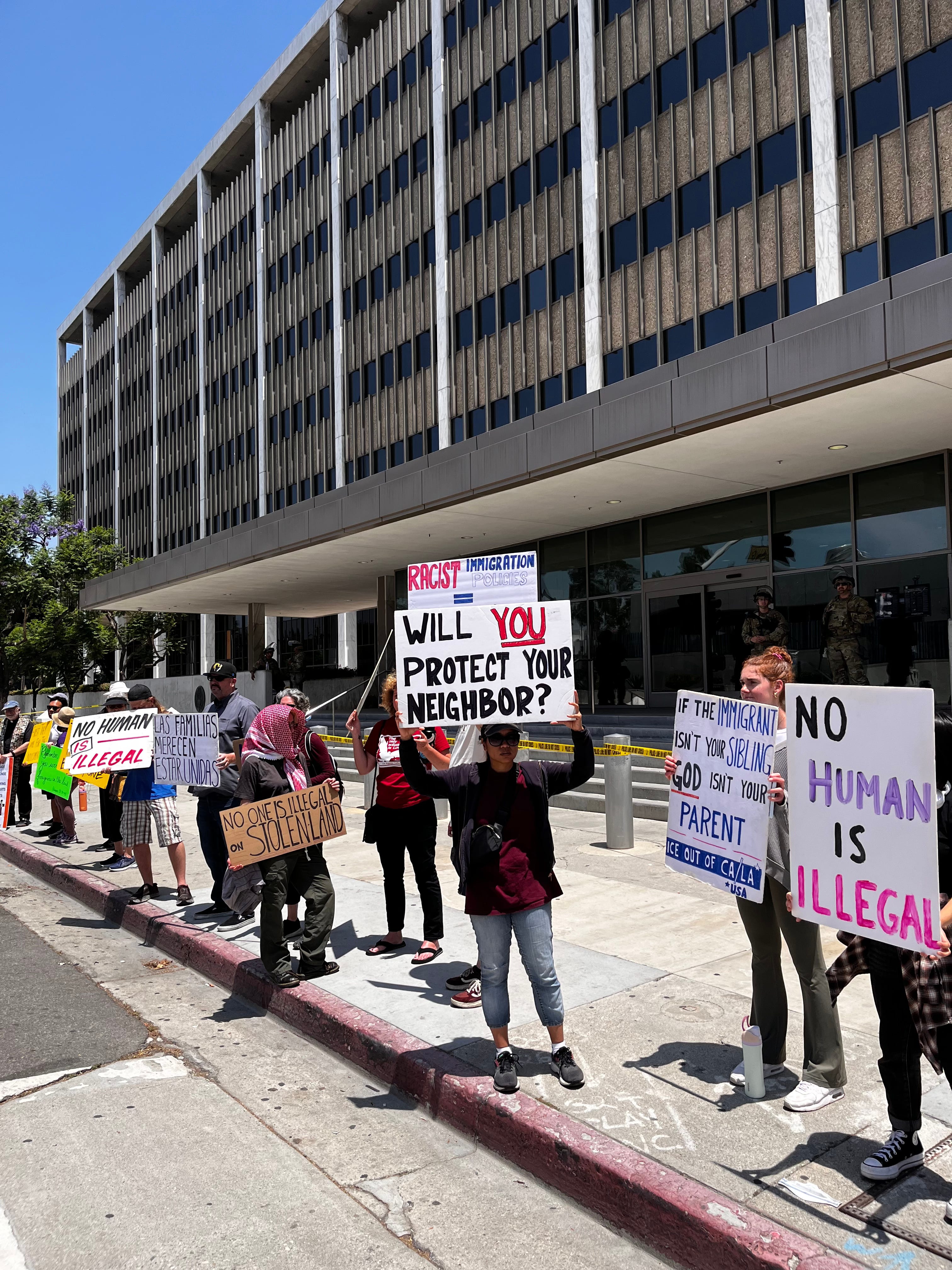
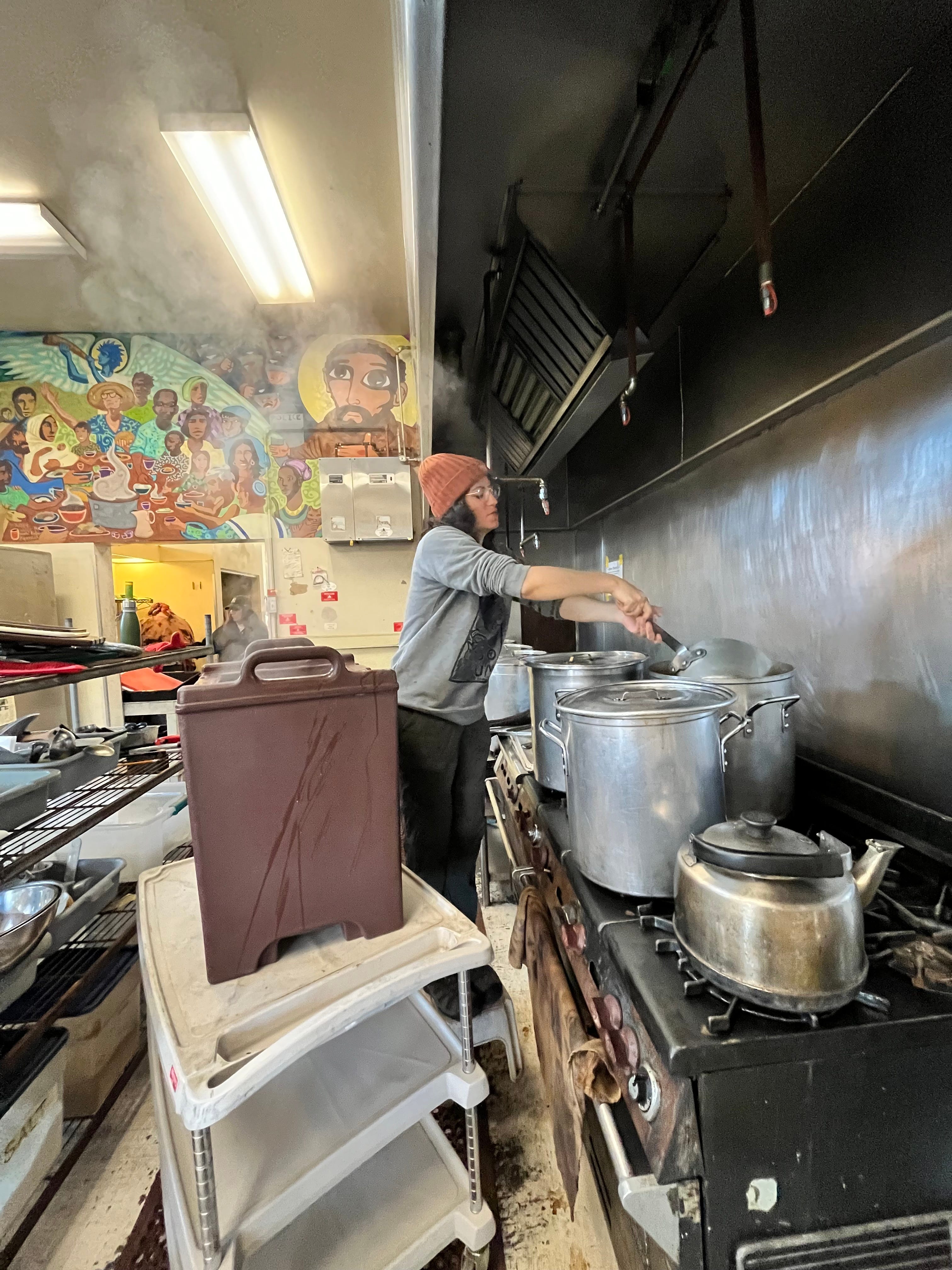
So I’m ending where I began: with an invitation. If you’re still reading this, I want you to join us. Come to the Los Angeles Catholic Worker for a week, a month, or longer. Come help at our soup kitchen. Take on some house chores. Stand in front of the federal building and denounce ICE. See what our difficult but beautiful shared life is all about. If you have been waiting for a sign, consider this the sign. Or if you can’t fathom living in a place where it rains barely 30 days a year (this Midwesterner sympathizes), call up your local Catholic Worker and see what they’re about. There is always room for one more.
Etty Hillesum, the Dutch Jewish woman who died in Auschwitz at age twenty-nine, wrote:
Ultimately we just have one moral duty: to reclaim large areas of peace in ourselves, more and more peace, and to reflect it towards others. And the more peace there is in us, the more peace there will also be in our troubled world.
Take the chance and come see for yourself if the LACW has a part to play in that moral duty. And if nothing else, you’ll get to chop a lot of lettuce. I’ll tell you which knives are sharpest.
People living the actual values of their religion are rare and special 💜 I really liked this
Solid evangelical Claire. Washing the dead, sharing the ritual, keep opening up that micro story.