
Pull up your anchors
On saying yes to the terror and beauty of the journey

Hey folks. Christmas has come and gone in Los Angeles and aside from the low-grade existential dread that accompanies a 4:30pm sunset, you’d barely know it. The trees remain as green as ever and the midday sun still makes you sweat. The other day at a local park, I saw a 15 by 15-foot pile of snow that someone had presumably carted down from the mountains so that kids could make snowballs while their parents shopped at the adjacent artisan market. It feels both luxurious and unsettling for a water-soft Midwesterner like me.
Jokes aside, the seasonal change and the abrupt arrival of 2024 have had me reflecting on where I’ve been and where I’m going. In my last update, I shared my intention to stay in Los Angeles at the Catholic Worker community for as long as it felt right. This is still the plan. But it begs the question, how did I get here, and what made it possible for my life to turn out this way?
Before answering that, a few highlights from the last three months: I’ve been learning how to cook the 60-plus gallon batches of beans that we serve at the soup kitchen. I went to a monoprint workshop with two Catholic Worker friends and learned some new art techniques. I fixed up one of our many basement bikes and took a couple rides on the streets around our neighborhood. My houseplants are surviving, maybe even thriving. The community had a beautiful Thanksgiving at our house with a bunch of guests from Skid Row. I’ve lost at chess more than once. I went to see Peter Gabriel in concert (again) and haven’t shut up about him before or since. I’ve been cementing my status as a regular at the local karaoke night. I attended several actions for the hotel workers’ strike and wrote about one for the Los Angeles Review of Books. I went to a couple of cease-fire protests as the senseless killing in Palestine went on. I continue to try and figure out my purpose when the world feels like it’s falling to pieces.
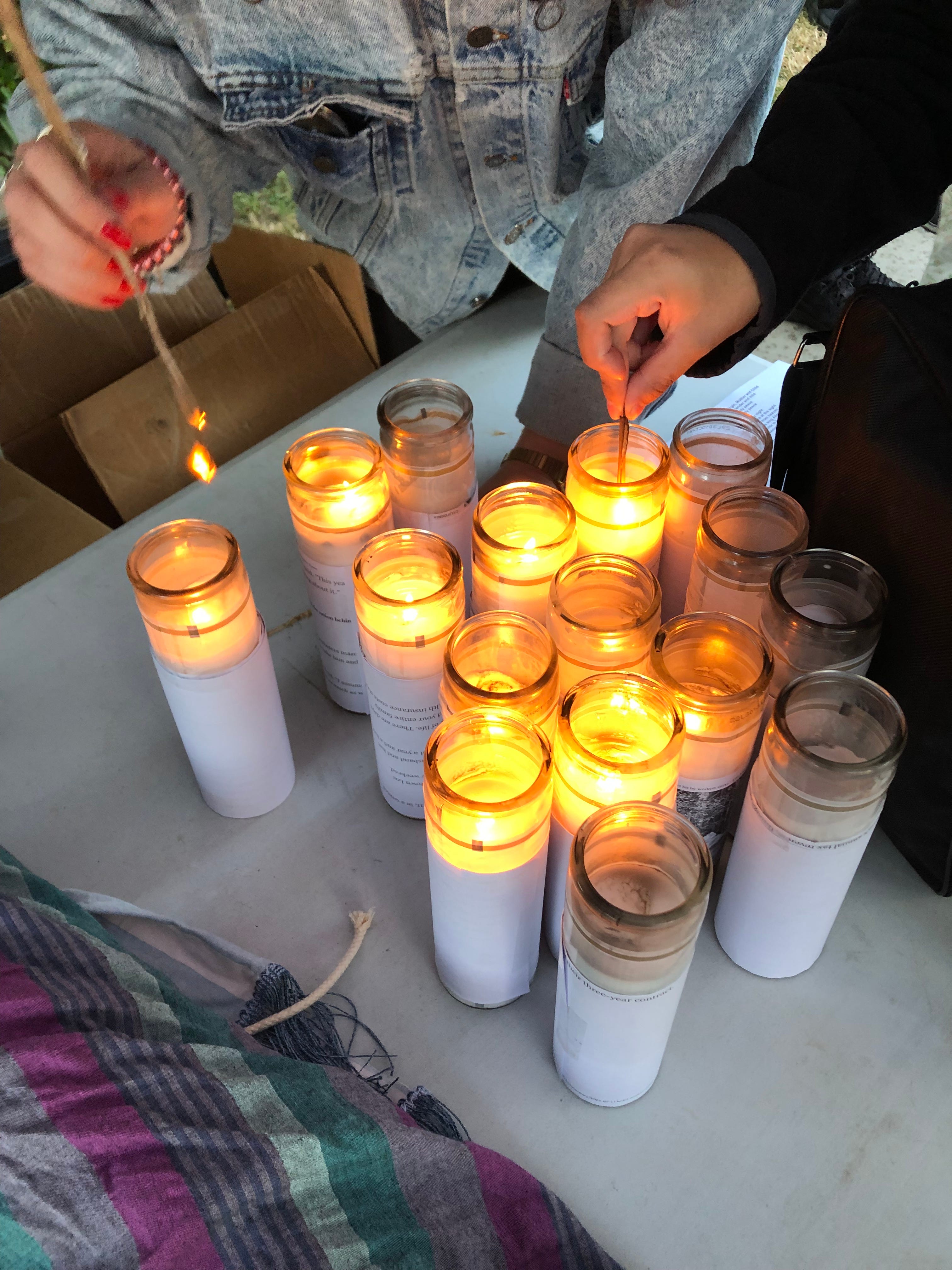
I want to cut right to the chase and tell you that although I am anxious about money, wary about living in California, uncertain of where all this is leading—I am happier than I have been in a long time.
Saying this near-sacrilege out loud—I am happy—matters to me for two reasons. One, after my last update, my mom tactfully pointed out that nearly all of my Substack posts have centered on something painful (oops). Two, it feels like a luxury to be able to say so. And I don’t want to keep it to myself. Like buried treasure, I want to trace the steps that led here, in the hopes of helping you find your own x-marks-the-spot.
Some of this journey was simply the fruit of making small choices a day at a time (see my earlier ramblings on listening to interior information even when it’s painful). But the most important thing was making the initial big choice to change my life.
Change my life. It’s one of those phrases that sounds trite, because facing the reality of what it means to actually do it—change one’s life—is overwhelming. At the end of the 2022 school year, I needed so much more than just adding a new habit or taking a bad one away. I needed a complete restructuring, a renewal.
This is where the metaphor of anchors and ships come in. Stick with me. All throughout my twenties, I had created anchors that helped me feel stable. Once I had decided to be a teacher, I didn’t question it much. Same went for my move to Madison, Wisconsin, and the way I was gravitating toward marriage, and even the way I thought of myself (as someone so fundamentally anxious that I just assumed life would always feel vaguely horrifying). I tried to heal my life within these boundaries, but felt like I was always ending up back where I started.
So what happens when you lift up an anchor? You get unmoored, unleashed from whatever has been keeping you in one place. You experience conversion: a turning, a bending into something new.
Dorothy Day, the founder of the Catholic Worker movement, talks about this conversion:
“One of the greatest evils of the day among those outside the proximity of the suffering poor is their sense of futility. Young people say, ‘What good can one person do? What is the sense of our small effort?’ They cannot see that we must lay one brick at a time, take one step at a time; we can be responsible only for the action of the present moment but we can beg for an increase of love in our hearts that will vitalize and transform all our individual actions, and know that God will take them and multiply them, as Jesus multiplied the loaves and fishes...
…The greatest challenge of the day is: how to bring about a revolution of the heart, a revolution which has to start with each one of us. When we begin to take the lowest place, to wash the feet of others, to love our brothers with that burning love, that passion, which led to the cross, then we can truly say, ‘Now I have begun.'” (Loaves and Fishes)
The first time I read those words, I thought of all the conversations I’ve had with people my age who desperately want to live differently, free of the pressures to make money, pay rent, and choose a secure job over a life of service or passion. So many of my peers want to make a dent in the wrongs of the world but fall prey to that sense of futility Day describes. I can’t change the whole system, so why try? Especially if I might lose everything. Better to throw down some anchors and stay safe.
Mike, one of our community members here at the Los Angeles Catholic Worker, always prays for the same thing every time we gather: “an end to this filthy, rotten, corrupt, immoral, and evil system, and a conversion of heart of our society.” He’s repeated this mantra so often that the whole community can recite it word-for-word along with him. But what could possibly bring about this conversion?
Society, “the system,” and all the words we use to refer vaguely to the sum total of everyone around us and their values, is ultimately made up of individuals. So this transformation of society only happens when each individual person chooses to do something drastically different. It happens when you decide to pull up your anchors and set out for a different way of living. To change something you thought you’d never change.
For what it’s worth: I don’t mean to say that this process is painless. There are so many things it was so hard to say no to, to leave behind. That’s why people don’t often pick up and change everything. It is painful and terrifying. I suppose the only thing that made it possible was seeing how I couldn't continue on in the fog of burnout that surrounded me, or continue hurting the people I loved as a result of denying my own dreams again and again.
So if my anchors were all of the choices that kept me where I was, what, then, is my ship? I could call it my soul, my life, my body—anything that I ride forward in time. I think back to the central questions I started this newsletter with over a year ago: who am I? Why am I here? How can I be of service to others as the world collapses? My time spent visiting Catholic Worker communities was meant to be a quick dip in the ocean, not a journey halfway around the world. But once the anchors were taken away, the wind took my ship to some surprising places. Is there any part of you that is curious what would happen if you did the same?
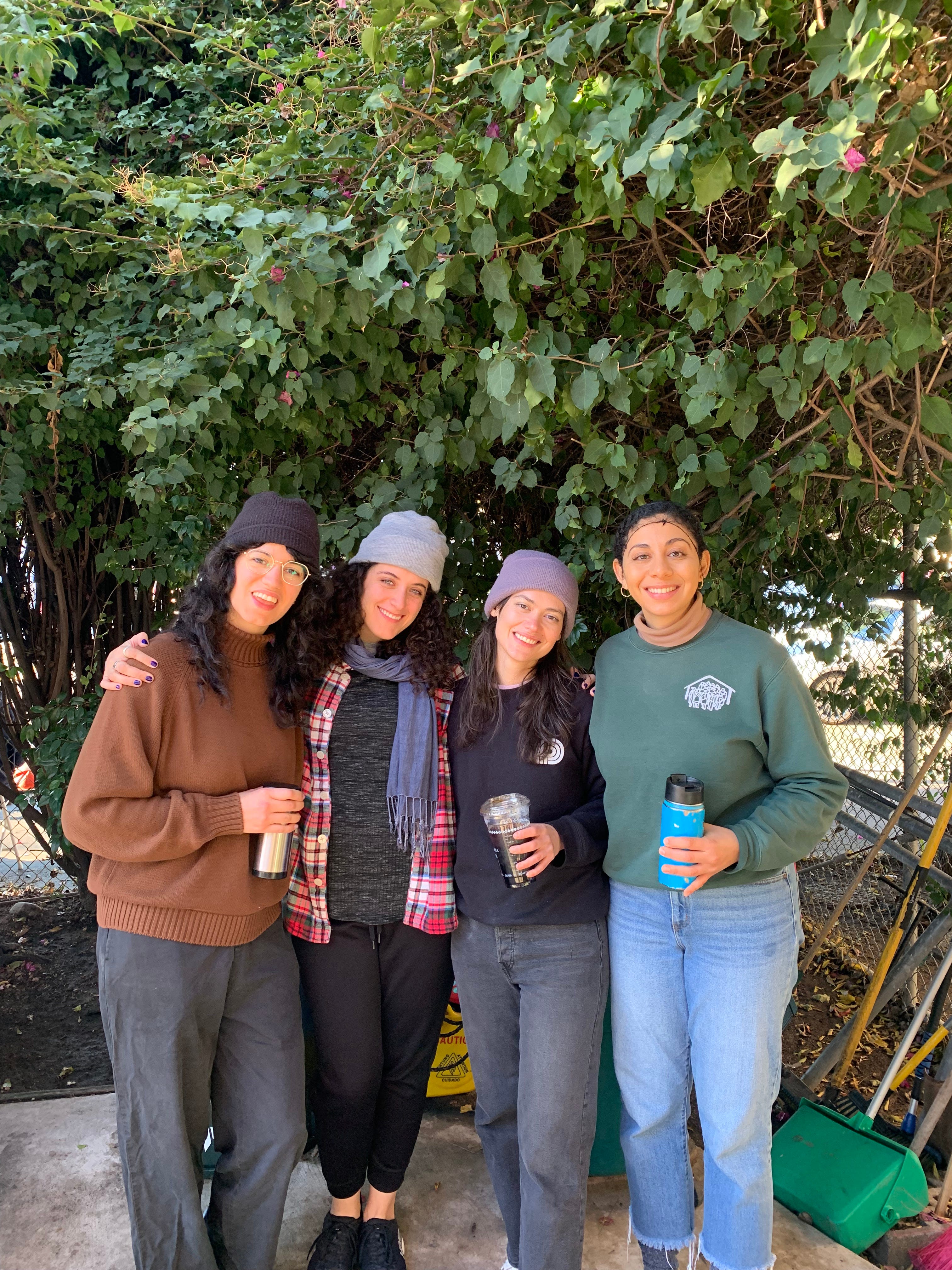
Maybe some of this resonates with you, maybe none of it does. I want to be clear that the kind of life I’m living now requires some sacrifices, so as not to over-romanticize where I’ve ended up. All this spaciousness I have in my life now to read, write, help run the soup kitchen, and participate in direct social justice actions is a result of the fact that I am not working a 9-to-5 job and have not been making money. There is a degree of safety and career stability that I am temporarily giving up by being here.
So I don’t mean to say this choice is for everyone. I don’t currently have dependents or anyone I need to keep fed and healthy besides myself. But if nothing else, I hope my experience makes it clear how our collective sense of being overworked, of not being able to devote more time to the things that truly move our hearts, like creative pursuits, community outreach, helping those around us, etc. is not an accident: things are being kept that way so that we do not experience the sense of liberation and possibility that comes with lifting up our anchors and choosing something new.
This process of identifying our anchors, choosing which to pull up and which to keep, is an ongoing process. Even now I sense myself wondering what I’m currently taking for granted that might need changing. For what it’s worth, I think this process is best done in community: through talking with beloved and trusted friends and family about your innermost dreams and how you can begin the journey of getting there. Who do you have in your life who knows you well enough to hear you speak about these things and reflect your heart’s desires back to you? Can you have those conversations with them? If not, what might it take to deepen your relationships?
Lastly: sometimes, it’s as much about putting down anchors as it is about pulling them up. I have been reflecting on commitment and stability. I’ve been praying to God to put the desire for those things in my heart. I’ve been wondering about returning to being a teacher, but maybe in a very different way than before. If you have an anchor that you know is keeping you someplace beautiful, by all means, keep it. My dream for all of us is that we find the balance of change and constancy that makes us whole.
I’d love to hear your thoughts on any of this as the new year gets underway. Find me online or send me something at 632 Brittania St, Los Angeles, CA, 90033. These changes only happen together. Sending lots of joy and well-wishes to wherever this finds you.
Love,
Claire